3.5°Bé
L'Atlantique · l'eau entre ici
The water does the work.We only decide how fast.
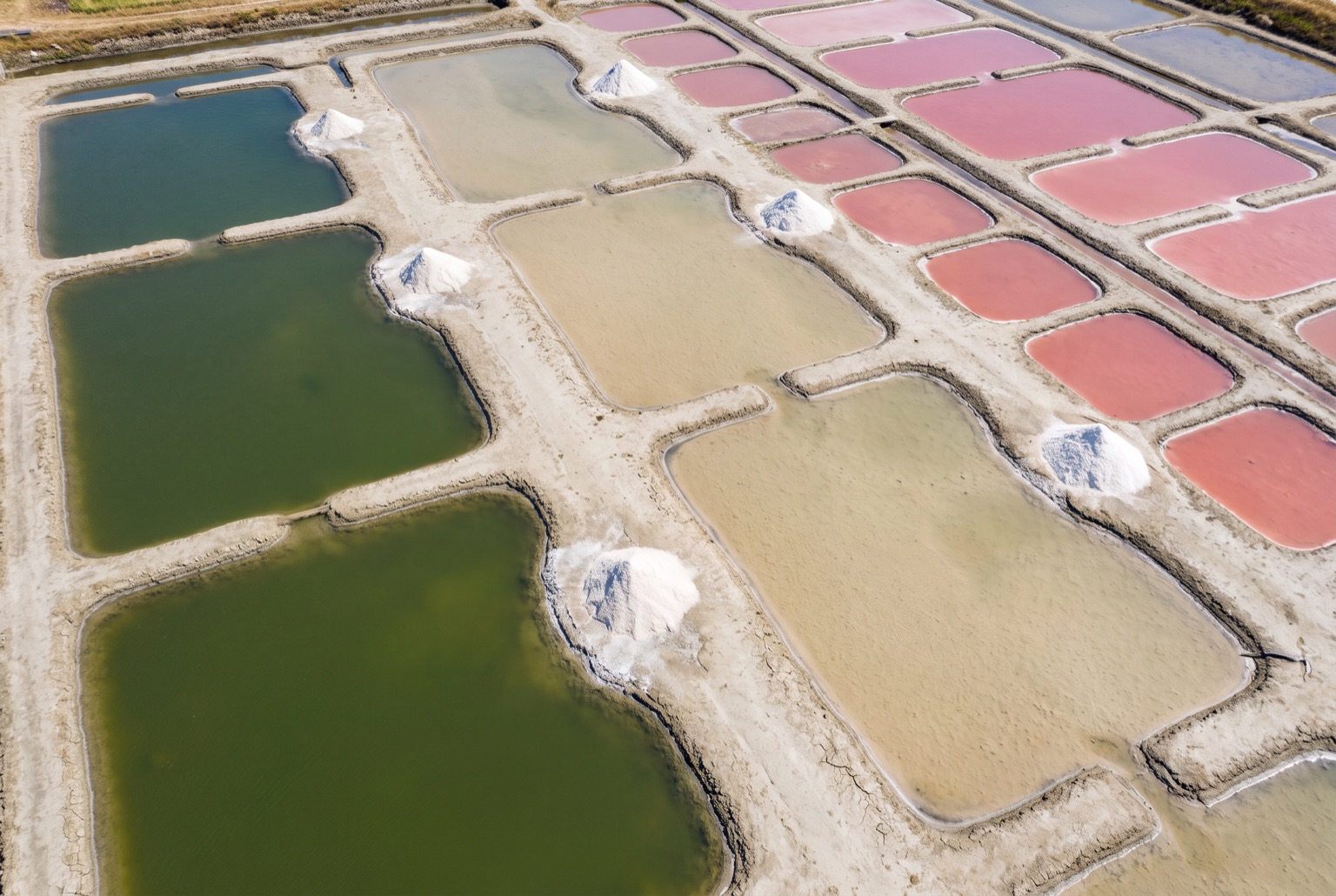
Sixty œillets cut into blue clay at Guérande, worked by the same family since 1743. No pumps, no heat, no machinery of any kind. The only energy in this system is the tide that fills it and the sun that empties it. Seawater enters at three and a half degrees Baumé and leaves, twenty-one days later, as salt.
3.5°Bé
La vasière
- Profondeur
- 40 cm
- Jour
- 0
The tide comes in on the spring flood and stops here. Forty centimetres of open sea, held.
La cascade
Seawater takes about three weeks to cross a saline, climbing from 3.5 to 25 degrees Baumé through five named ponds. It gets stronger and it gets shallower: forty centimetres at the tide gate, three in the pan where salt forms. That is why one still afternoon finishes a harvest and one shower of rain undoes three weeks.
| Bassin | °Bé | Profondeur | Jour |
|---|---|---|---|
| La vasière | 3.5 | 40 cm | 0 |
| Le cobier | 6.0 | 25 cm | 4 |
| Les fares | 12.0 | 12 cm | 11 |
| Les adernes | 18.0 | 8 cm | 17 |
| L'œillet | 25.0 | 3 cm | 21 |
Past 24 °Bé the salt comes out of solution. The water turns rose a little before that, which is the paludier's warning that the pan is nearly ready.
60œillets
La saline
A marsh that is also amachine.
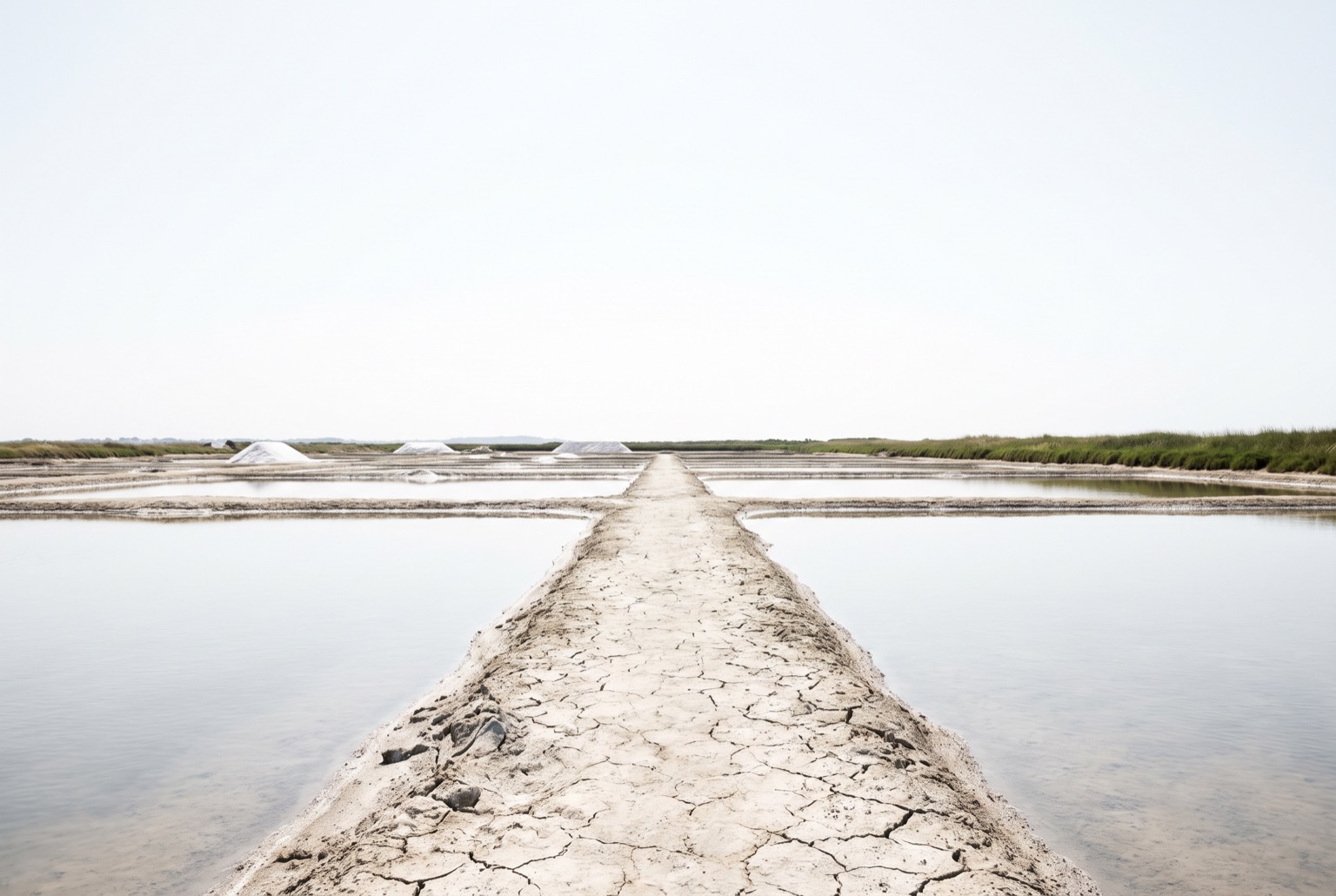
Sixty pans cut into blue clay on the marais salants of Guérande, worked by the Le Gall family since 1743. The whole saline runs on two forces and neither of them is ours: the spring tide fills it, and the sun empties it. There is no pump on this land and there never has been.
What a paludier owns is not the salt. It is the grade of the clay floors, the width of the channels, and the judgement of when to let water through. A set of decisions about rate, made every day for three months, in a system that cannot be paused.
2sels
Le sel
Same pan. Same afternoon.Different salt.
The difference between the two salts this saline sells is not grade, or grinding, or anything done afterwards. It is where in the water each one forms, and that is decided by the weather in the hour they appear.
Gros sel
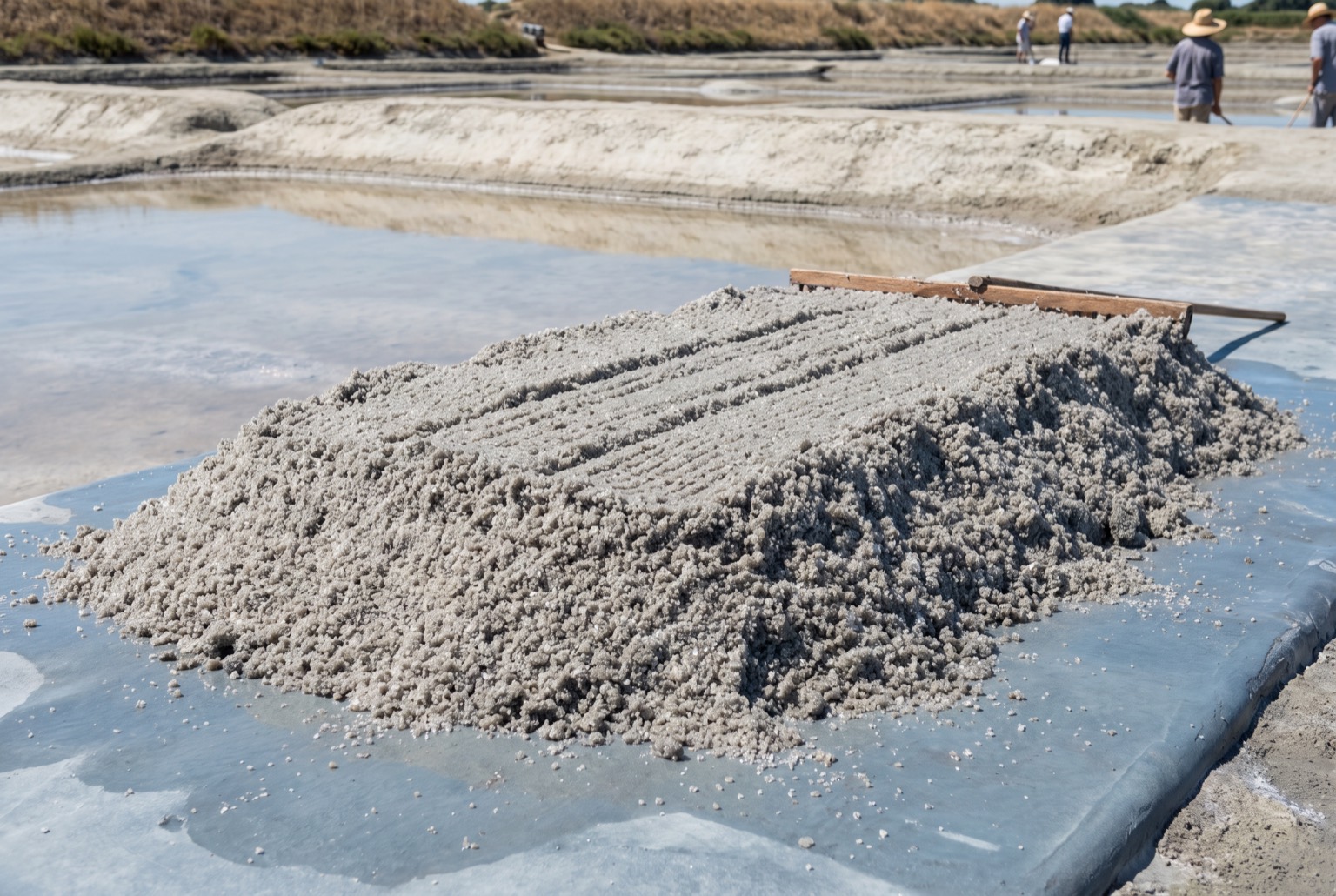
On the floor · raked with the las
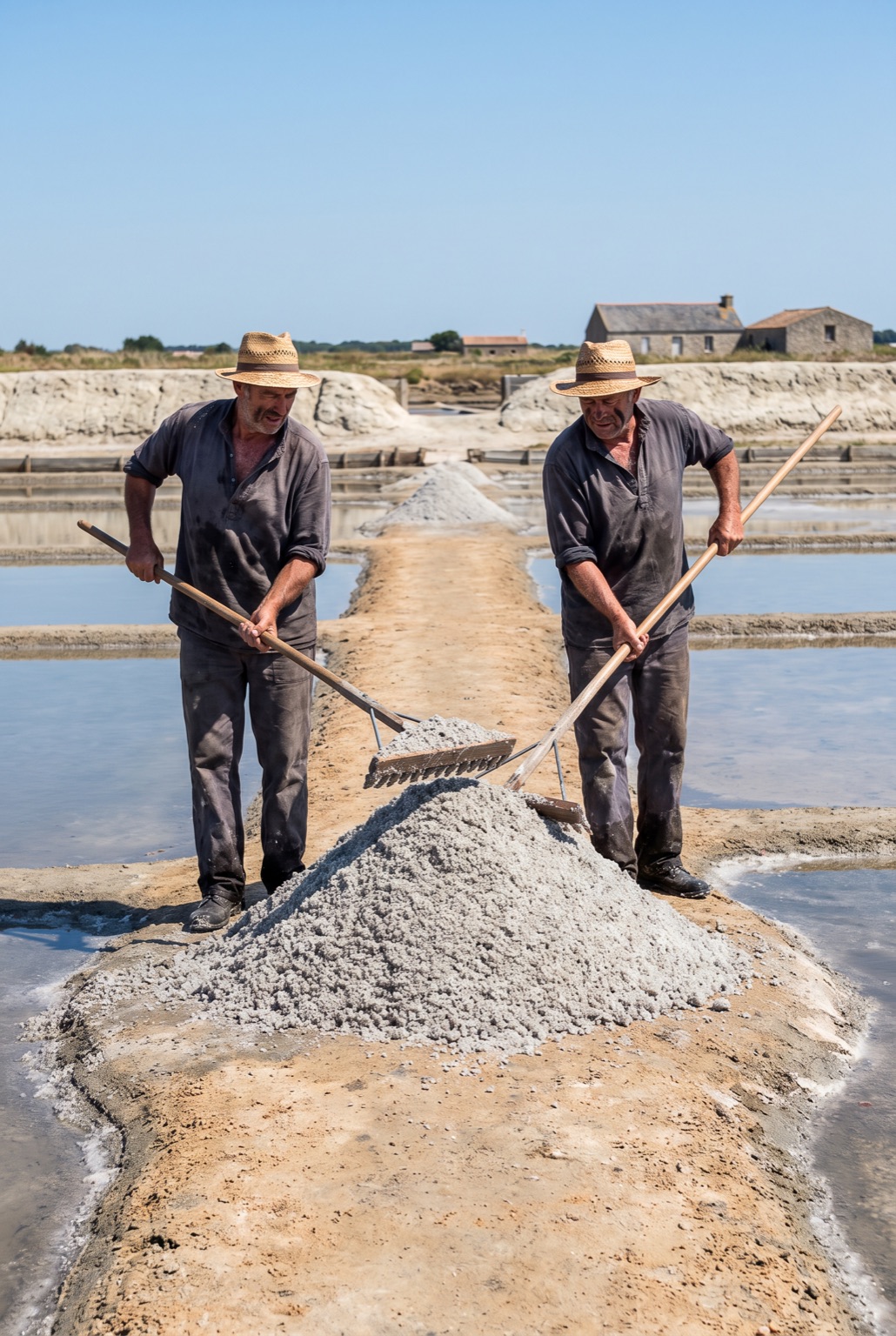
Crystals form through the depth of the brine and fall. The paludier draws them up the slope of the pan onto the ladure, grey from the clay they grew against. Two hundred kilos in a good afternoon.
€3.40 / kg
Fleur de sel
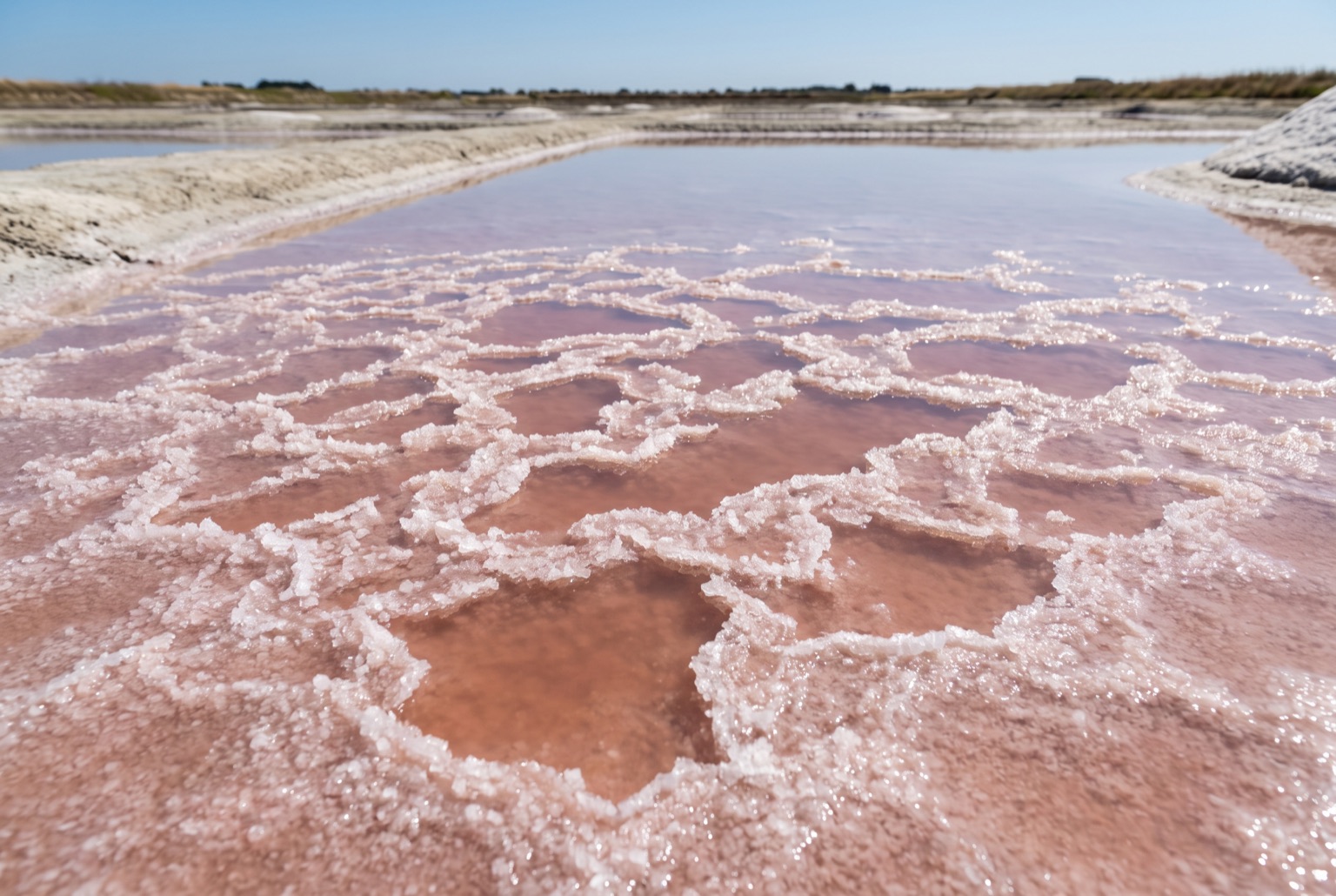
On the surface · lifted with the lousse
On still, hot afternoons a fine crust forms on the surface tension and stays there. It is skimmed off the top before it sinks, white because it never touched the clay. A breath of wind and there is none at all that day.
€28.00 / kg
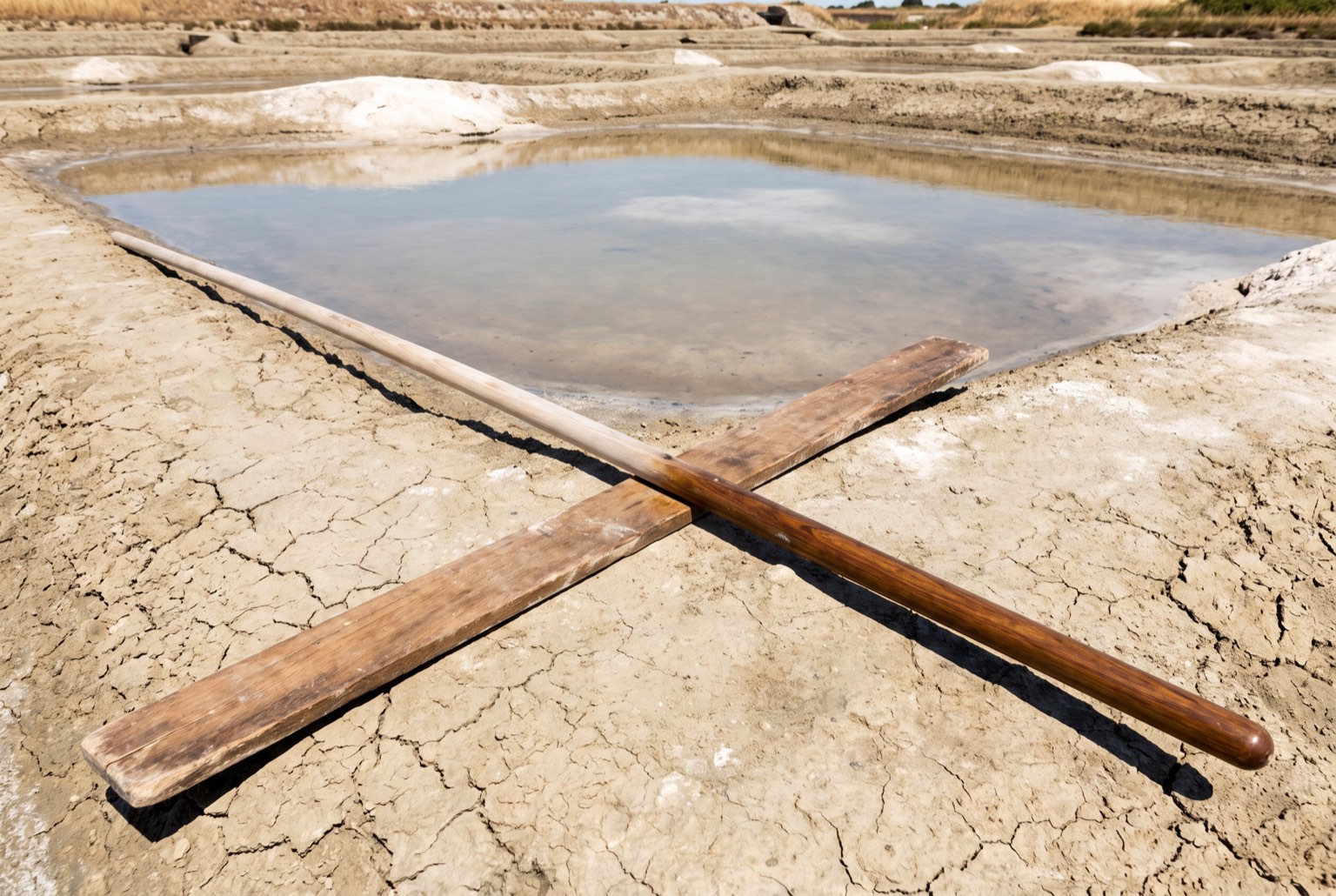
5.2m
Le las
One tool, and no reasonto change it.
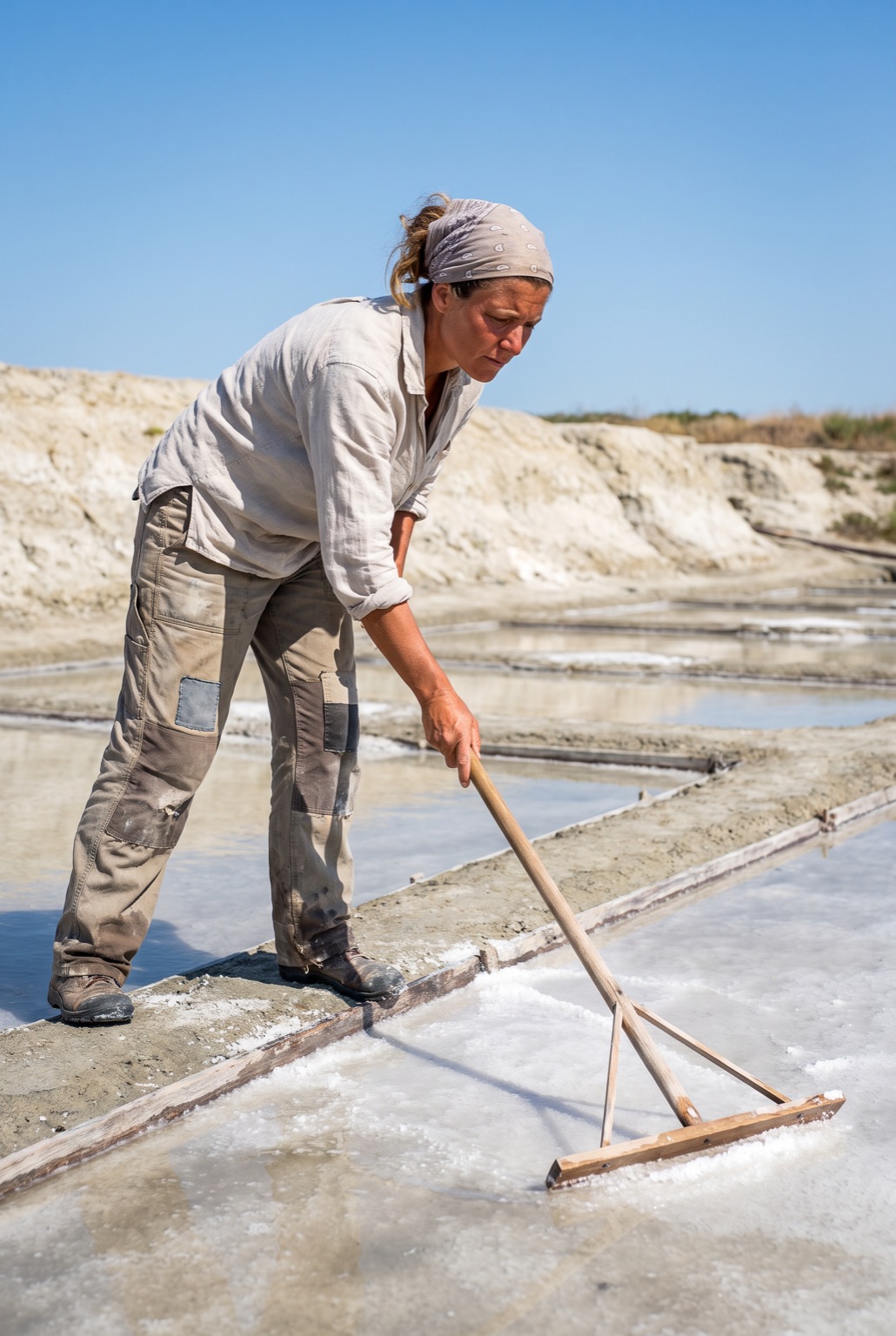
A shaft of ash a little over five metres long with a flat board at the end. It has no moving parts, no metal, and no version number. The paludier stands on the trémet and draws the salt toward himself across seventy square metres of clay without ever stepping into the pan, because a footprint in a clay floor is a fault that will hold water wrong for years.
The length is not tradition. It is the reach of a pan, and pans are the size they are because that is how far a person can pull.
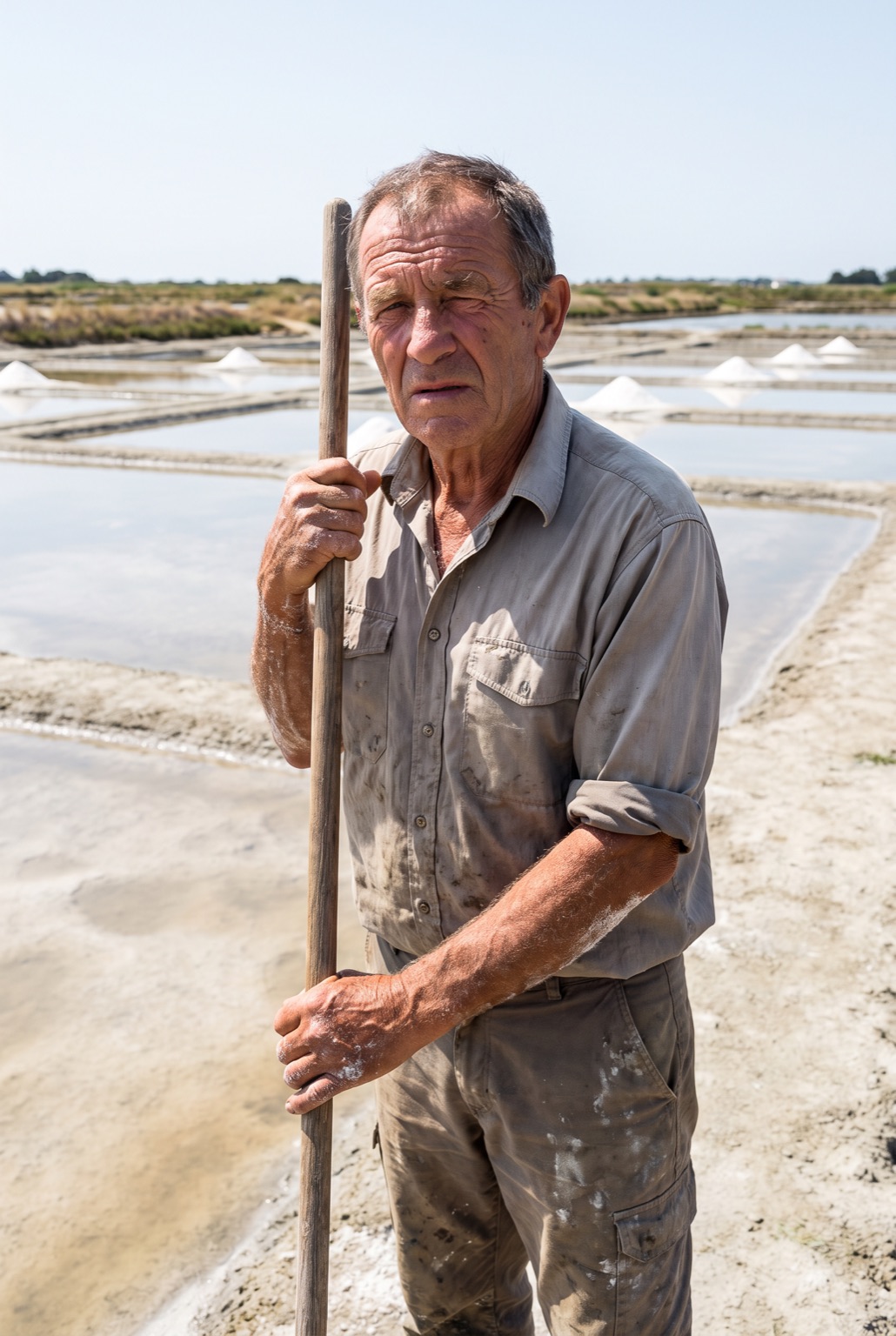
3paludiers
Les paludiers
Nobody here is watching the salt.They are watching the sky.
The work is ninety days long and it is mostly waiting, followed very suddenly by not waiting. When a pan is ready it is ready for about four hours.
2026récolte
La récolte
Buy from a pan,not from a brand.
Sixty pans do not yield the same salt. Some hold heat, some sit out of the wind, one drains so slowly it works a fortnight later than the rest. This is what each of ours gave this season.
| Œillet | Gros sel | Fleur | Le pan |
|---|---|---|---|
| n° 7 Le Grand Sept | 1840 kg | 41 kg | Holds the afternoon heat; the heaviest pan on the saline. |
| n° 12 La Croisée | 1620 kg | 38 kg | Cut at the crossing of two trémets. Even, reliable, unremarkable. |
| n° 23 Le Bas | 1975 kg | 29 kg | Drains slowest, so it works latest. Big on gros sel, thin on fleur. |
| n° 31 La Sèche | 1210 kg | 57 kg | Shallow and out of the wind. Half the salt, the best fleur we cut. |
| n° 44 Le Vent | 1385 kg | 22 kg | Exposed. A breeze ruins fleur, so this pan is raked for gros sel only. |